Exploring Metal Castings and their wide-ranging uses across multiple industries
A Deep Dive Into the Different Kinds Of Metal Casting and Their Uses
Metal Casting encompasses various strategies, each tailored for details applications and demands. From the cost-effective sand casting approach to the precision of investment spreading, each procedure has one-of-a-kind benefits. Pass away casting stands apart in high-volume production situations, while lost foam spreading introduces innovative style opportunities. In addition, permanent mold and mildew spreading is identified for its longevity. Recognizing these approaches opens up a window into their functional usages and effects in various industries. What exists beneath the surface of these spreading techniques?
Sand Casting: A Functional and Cost-efficient Method
Numerous casting approaches exist, sand casting stays one of the most affordable and flexible techniques in the metalworking market. This method utilizes a mixture of sand and a binding agent to create mold and mildews, enabling the manufacturing of parts in varied sizes and forms. Sand spreading is particularly helpful for small to tool manufacturing runs, as it requires very little ahead of time investment in tooling compared to other spreading techniques.
The process starts with the creation of a mold and mildew, where liquified steel is put in to form the wanted object as soon as cooled down. Its flexibility allows making use of various steels, consisting of iron, steel, and aluminum. Furthermore, sand casting can fit complex geometries, making it ideal for a variety of applications, from auto elements to elaborate creative pieces. In general, sand casting's efficiency and flexibility strengthen its relevance in the production landscape.
Financial Investment Casting: Accuracy and Information for Complicated Forms
Financial investment spreading attracts attention as an approach renowned for its capability to produce very outlined and detailed parts. This process involves creating a wax pattern that is coated with a ceramic covering, which is after that heated to eliminate the wax and harden the covering. The result is an accurate mold that can record complicated geometrical forms with amazing accuracy.
This casting technique is especially valuable for generating parts with slim wall surfaces, great attributes, and limited resistances, making it suitable for sectors such as aerospace, automobile, and medical devices. Financial investment spreading fits a selection of steels, consisting of stainless steel, aluminum, and titanium, allowing suppliers to meet details product requirements.
Additionally, the process minimizes machining needs post-casting, which can boost efficiency and minimize production prices. In general, financial investment spreading is a preferred option for applications where accuracy and detail are extremely important.
Die Spreading: High-Volume Production With Excellent Surface Finish

Pass away casting is a very efficient production process that succeeds in producing huge volumes of steel get rid of outstanding surface area finishes. This technique entails forcing liquified steel into a mold and mildew tooth cavity under high pressure, enabling fast manufacturing cycles and harmony in the completed products. Typically utilized products include magnesium, zinc, and aluminum, which supply exceptional mechanical buildings and deterioration resistance.
Die casting is especially helpful for industries such as vehicle, electronic devices, and consumer items, where accuracy and quality are extremely important. The process enables complex styles, lowering the requirement for added machining and completing procedures. In addition, the smooth surface areas developed through die casting typically call for minimal post-processing, causing reduced general manufacturing expenses. As a high-volume manufacturing technique, die casting is optimal for makers seeking effectiveness without endangering on top quality, making it a recommended selection for many applications across various markets.
Lost Foam Casting: Cutting-edge Strategy for Intricate Layouts
Lost foam casting reinvents the manufacturing of complicated metal parts by making use of a distinct procedure that eliminates the requirement for standard molds. Rather of conventional mold-making, this method employs a foam pattern that is coated with a refractory material. Once the pattern is set, liquified metal is poured directly right into the mold and mildew, causing the foam to vaporize and leave behind a precise dental caries for the metal to load. This ingenious strategy permits elaborate layouts and thorough features that might be testing to accomplish with various other casting approaches.
Additionally, shed foam casting can lower waste and power consumption, making it an eco friendly alternative. Industries such as aerospace and auto benefit considerably from this method, as it sustains the production of lightweight elements with intricate geometries. Overall, shed foam spreading sticks out for its ability to supply premium, personalized metal parts efficiently.
Long-term Mold And Mildew Casting: Durability and Consistency in Steel Parts
Permanent mold and mildew casting is a highly efficient technique for generating consistent and resilient steel components, leveraging reusable molds that are commonly made from steels such as iron or steel. This spreading procedure involves putting liquified steel into these mold and mildews, which are preheated to improve item high quality and lower issues. Making use of reusable mold and mildews not only decreases waste but likewise enables greater manufacturing prices, making it economically helpful for producers.
The resulting elements exhibit excellent dimensional accuracy and surface finish, making them suitable for applications in vehicle, aerospace, and industrial machinery. In addition, long-term mold and mildew casting can suit a range of alloys, additionally increasing its convenience. The sturdiness of the actors parts is enhanced because of the controlled cooling prices that advertise finer grain frameworks. Overall, this casting technique stands apart for its capability to Discover More produce top notch steel parts that meet strenuous performance requirements, ensuring dependability sought after environments.
Often Asked Inquiries
What Products Can Be Utilized in Different Metal Casting Procedures?
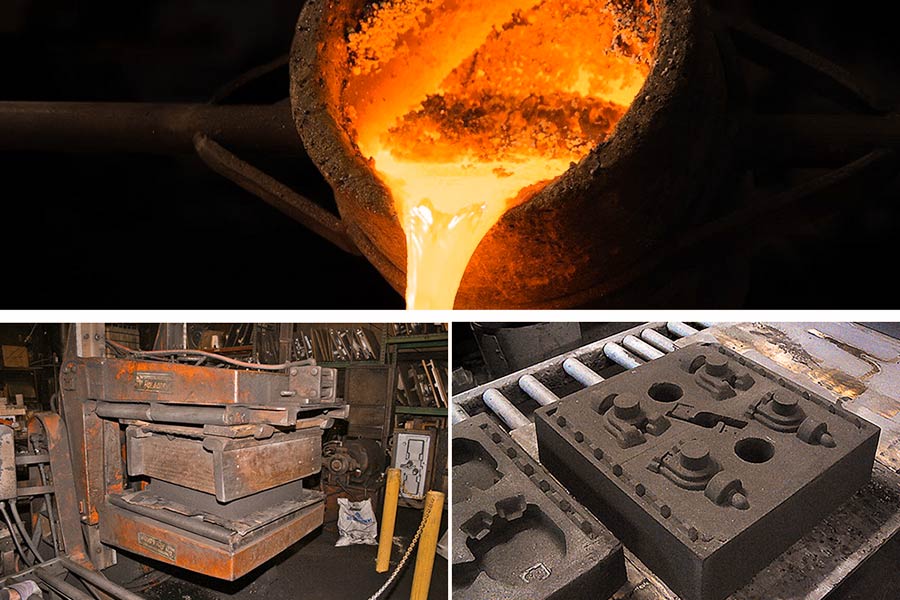
Numerous materials can be made use of in Metal Casting processes, consisting of light weight aluminum, zinc, bronze, and iron. Each product offers special buildings, affecting the spreading technique's efficiency, toughness, and viability for different applications in production.
Just How Do Casting Methods Affect the Mechanical Characteristics of Metals?
Casting approaches significantly influence the mechanical buildings of steels, affecting variables like strength, solidity, and Get More Info ductility. Variants in cooling down rates and mold products can bring about different microstructures, inevitably impacting the efficiency of the end product.
What Are the Ecological Influences of Metal Casting Procedures?
Metal Casting procedures can lead to air and water air pollution, resource exhaustion, and substantial energy intake (Metal Castings). In addition, the generation of waste products and greenhouse gas emissions substantially contributes and impacts the environment to environment change
Just how Do You Choose the Right Spreading Method for a Job?
Picking the best spreading method entails examining task needs, product residential or commercial properties, complexity, and production volume. Aspects like price efficiency, surface high quality, and preparation additionally play essential duties in determining the most ideal technique.
What Safety and security Preventative Measures Should Be Taken Throughout Metal Casting Workflow?
During Metal Casting operations, security preventative measures include putting on safety equipment, guaranteeing correct air flow, performing devices inspections, maintaining a clean work space, and having emergency procedures in area to deal with potential risks like burns or hazardous fumes.
From the economical sand spreading technique to the accuracy of financial investment spreading, each procedure has one-of-a-kind advantages. Pass away spreading is an extremely effective manufacturing process that excels in producing huge quantities of steel components with phenomenal surface finishes. Lost foam spreading revolutionizes the manufacturing of intricate metal components by making use of an one-of-a-kind process that gets rid of the demand for typical molds (Wisconsin Aluminum Foundry). Long-term mold and mildew casting is an extremely efficient method this content for producing regular and long lasting steel components, leveraging recyclable molds that are usually made from metals such as iron or steel. Numerous products can be used in Metal Casting processes, consisting of light weight aluminum, zinc, iron, and bronze